Measuring body temperature can often give helpful data regarding a person’s health status. Taking a temperature orally is one of the most common ways to check a temperature, but it is important to ensure that checking a temperature under the tongue is performed accurately and safely in order for the data to be useful and to prevent injury.
Avoid measuring body temperature under the tongue if the person is:
In order to measure an accurate oral temperature, consider other common factors that may affect the oral temperature reading. Wait at least ten to 15 minutes to check an oral temperature if the person has been:
Glass thermometers are often less expensive than other types of thermometers. Older styles of thermometers contained mercury, a silver-white substance that would rise to indicate the measured temperature. According to the Environmental Protection Agency's June 11, 1998 online article entitled "Frequently Asked Questions About Mercury Thermometers," mercury poses a potential threat to the environment, people, and animals. Newer versions may look and work very similar but are mercury free and contain red or blue alcohol or galinstan, a mixture of gallium, tin, and indium.
Regardless of the type of thermometer used, inspect it carefully for any chips, cracks, or other defects. Oral thermometers used in clinical settings are often kept in chargers and have disposable probe covers. The thermometer should be cleaned between patients per manufacturer’s recommendations and infection control guidelines. Instead of using a probe cover, some thermometers may be soaked in an appropriate antiseptic or wiped with a cleaning solution before and after use.
Carefully place the bulb end of the thermometer under the tongue and instruct the person to:
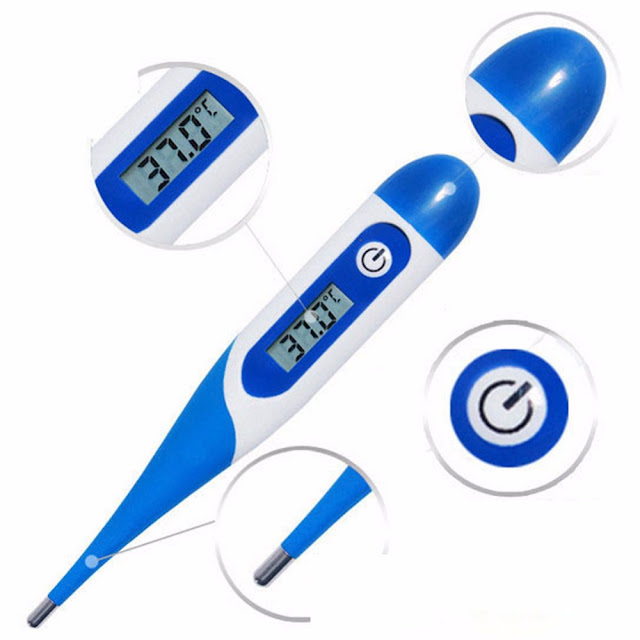
Digital oral thermometers have a numeric display that appears on a small screen. This number may be in Fahrenheit or Celcius. Digital thermometers may beep, blink, or become stationary to indicate a completed reading, depending on the manufacturer. Glass thermometers should be held in place for three minutes.
After removing a glass thermometer from the mouth, remove and discard the probe cover if used and carefully wipe the thermometer with a dry tissue from end to tip. Hold a glass thermometer at eye level and read the top of the liquid level to the nearest line. Long lines indicate whole number degrees while short lines indicate 0.2 degrees. Digital thermometers may be read by looking at the number in the screen and the probe cover should be discarded if used.
An elevated temperature or fever may or may not indicate that an infection is present and the lack of a fever does not necessarily mean that the person is healthy and well. Temperature measurements are often collected in addition to other vital signs, such as pulse, blood pressure, and respiratory rate.

When Should an Oral Temperature be Taken?
Checking an oral temperature can be convenient, quicker, and less invasive than routes such as the rectal route, but there are certain circumstances in which an oral temperature should not be taken. If the oral route should be avoided, select a different route if needing to acquire the data immediately.Avoid measuring body temperature under the tongue if the person is:
- under the age of six
- experiencing chills or rigors or if her teeth are chattering
- bleeding orally or has pain and/or sores in the mouth
- recovering from recent surgery in the mouth
- receiving oxygen via a mask
- cannot breathe or is having difficulty breathing through his or her nose
- using a nasogastric tube for feedings
- on seizure precautions
- unable to hold the lips closed
- confused, combative, or uncooperative
- unconscious or not responsive
In order to measure an accurate oral temperature, consider other common factors that may affect the oral temperature reading. Wait at least ten to 15 minutes to check an oral temperature if the person has been:
- eating
- drinking
- smoking
- chewing gum
Types of Oral Thermometers
The equipment needed for checking an oral temperature is an oral thermometer. Clinical settings may designate an oral thermometer for either use in the mouth or under the arm (axillary). Rectal thermometers are often identified by a different shaped tip and/or a different color coding. Many oral thermometers have a blue or green end while rectal thermometers typically have a red marking.Glass thermometers are often less expensive than other types of thermometers. Older styles of thermometers contained mercury, a silver-white substance that would rise to indicate the measured temperature. According to the Environmental Protection Agency's June 11, 1998 online article entitled "Frequently Asked Questions About Mercury Thermometers," mercury poses a potential threat to the environment, people, and animals. Newer versions may look and work very similar but are mercury free and contain red or blue alcohol or galinstan, a mixture of gallium, tin, and indium.
Regardless of the type of thermometer used, inspect it carefully for any chips, cracks, or other defects. Oral thermometers used in clinical settings are often kept in chargers and have disposable probe covers. The thermometer should be cleaned between patients per manufacturer’s recommendations and infection control guidelines. Instead of using a probe cover, some thermometers may be soaked in an appropriate antiseptic or wiped with a cleaning solution before and after use.
How to Check a Temperature Under the Tongue
Shake down the liquid in a glass thermometer before placing it in the mouth. This can be done by holding the thermometer firmly and flicking the wrist until the liquid reads at or below the lowest number. Be careful to shake the thermometer away from people and objects.Carefully place the bulb end of the thermometer under the tongue and instruct the person to:
- close his mouth
- breathe through his nose
- not bite on the thermometer
Digital oral thermometers have a numeric display that appears on a small screen. This number may be in Fahrenheit or Celcius. Digital thermometers may beep, blink, or become stationary to indicate a completed reading, depending on the manufacturer. Glass thermometers should be held in place for three minutes.
After removing a glass thermometer from the mouth, remove and discard the probe cover if used and carefully wipe the thermometer with a dry tissue from end to tip. Hold a glass thermometer at eye level and read the top of the liquid level to the nearest line. Long lines indicate whole number degrees while short lines indicate 0.2 degrees. Digital thermometers may be read by looking at the number in the screen and the probe cover should be discarded if used.
Recording the Temperature
It is helpful to record a temperature so that trends can be identified. When recording a temperature in a clinical setting, it is important to follow facility procedure and to notify the nurse or designated licensed caregiver per protocol. If recording a temperature at home, it is helpful to document:- time the temperature was taken
- route for checking the temp
- any therapy given for a fever
- additional readings as appropriate
How to Accurately Check Temperature in the Mouth
Choosing the oral route to check a temperature involves several considerations, such as the condition of the person and the thermometer. Follow appropriate hygienic measures to prevent the spread of germs and infections such as MRSA. Ensure that manufacturer’s directions are followed for using, reading, and storing an oral thermometer.An elevated temperature or fever may or may not indicate that an infection is present and the lack of a fever does not necessarily mean that the person is healthy and well. Temperature measurements are often collected in addition to other vital signs, such as pulse, blood pressure, and respiratory rate.